FREE-SPACE
-
In Architecture, the term “space” is characterized by two contradictory yet complementary qualities: being by definition free, it has to be delimited in order to exist. A space needs a perimeter. In that sense, an open field is not a space but a territory. Therefore, if we add some reference points and linesin the emptiness of this territory, we could say that in between them there is a space. The perimeter of a space can be generated in many different ways through the use of architectural elements — a floor, a set of columns, walls, or a roof. When it is in an urban context, its potential grows due to the contrast it creates. As an opportunity found in the absence of built mass, it can be seen as a “free space”. In a city, a free space is fed by the densification around it and, in this condition, its perimeter plays an important role. We like to think about this essential relationship between perimeter and space through the beautiful concept of (in)determinacy — the creation of a free space first needs to be determined by a specific form to keep itself empty and full of possibilities.
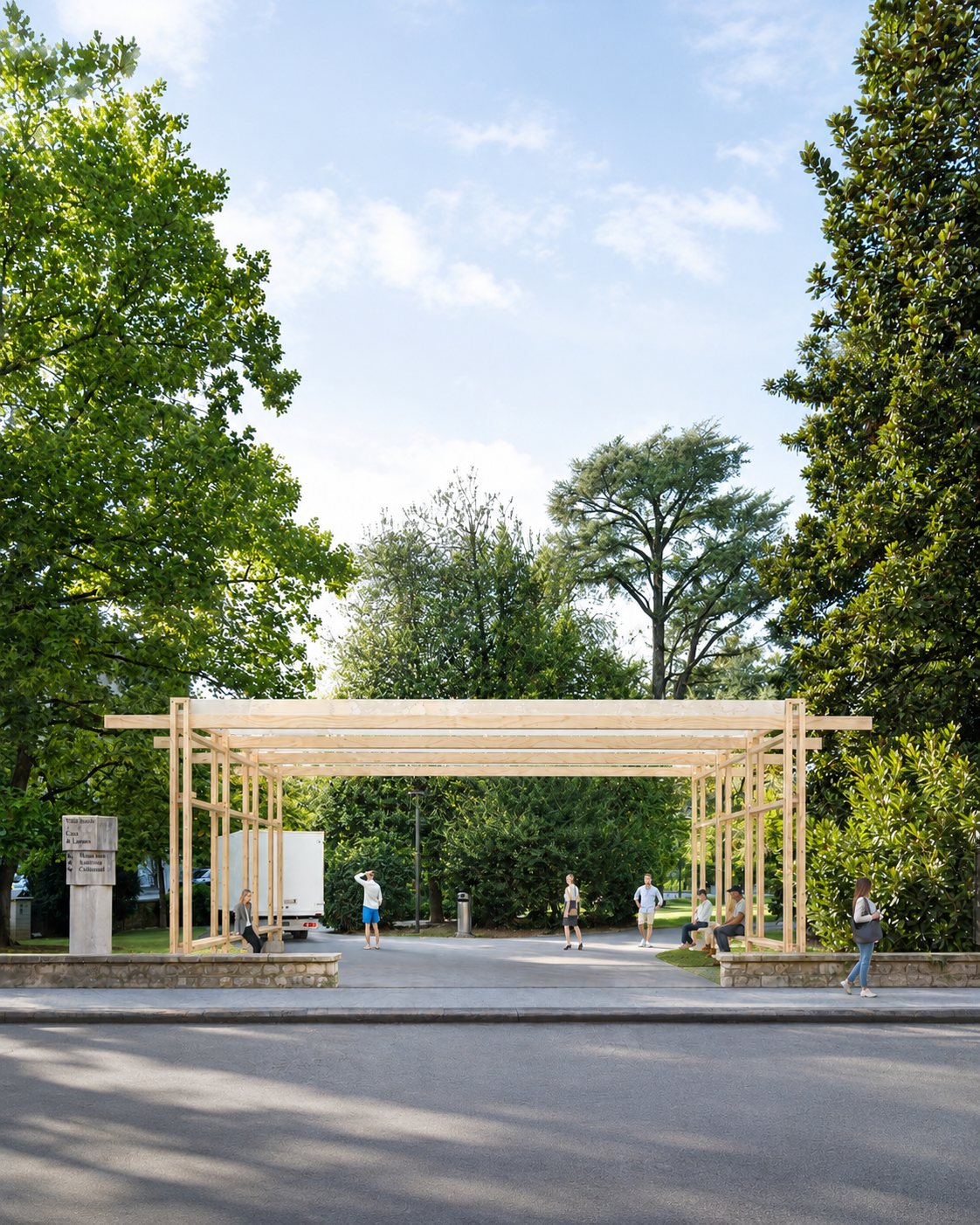
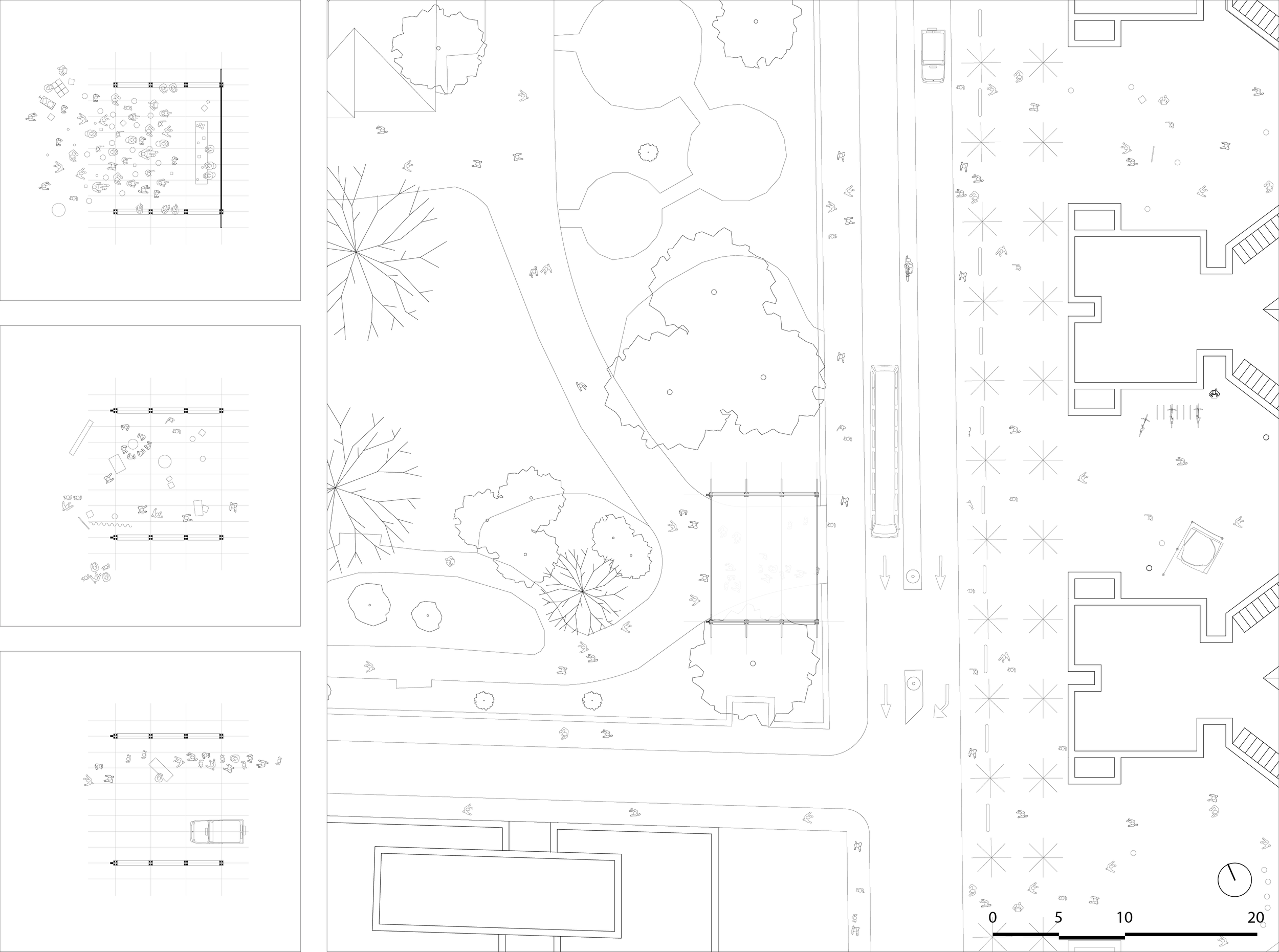
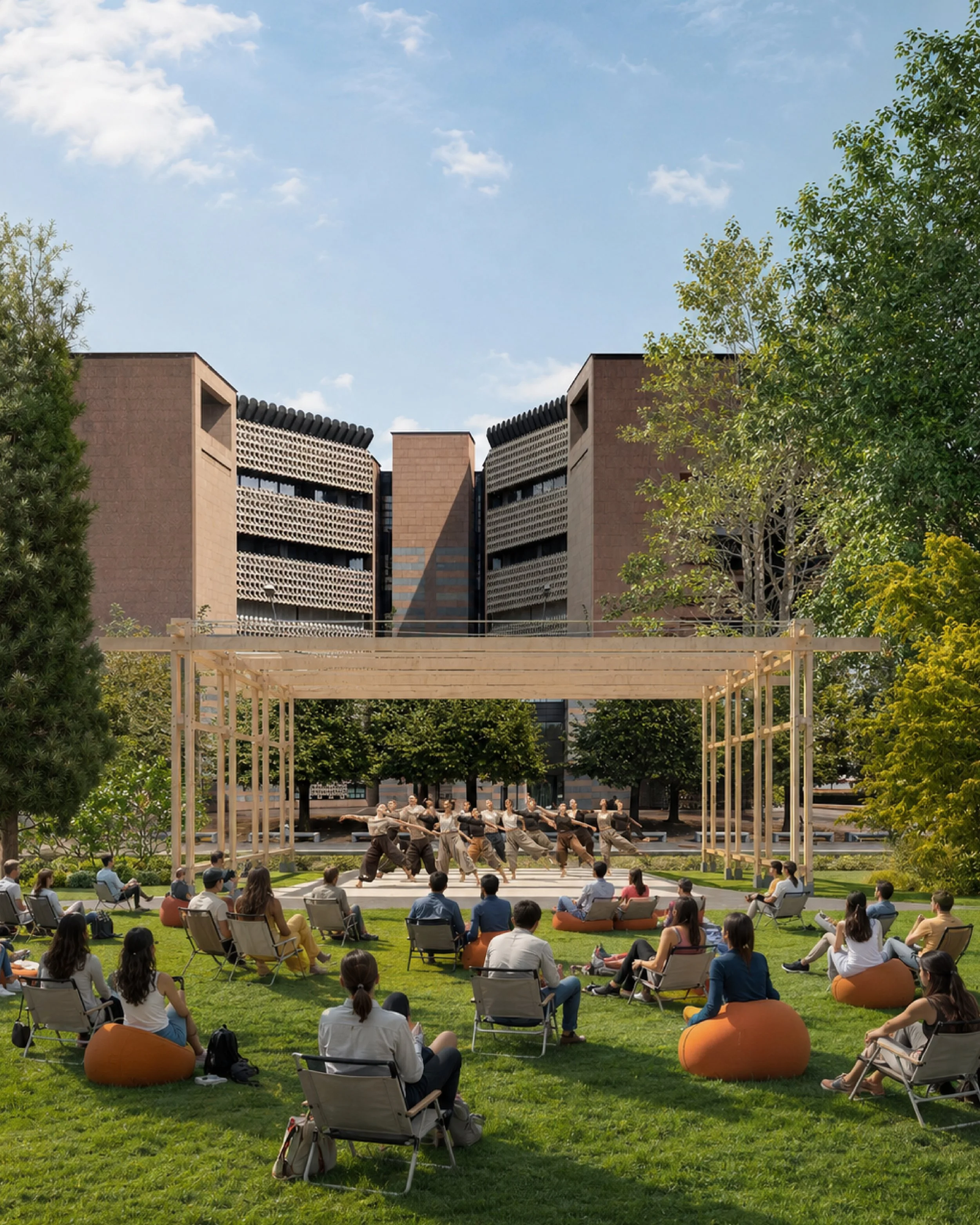
The new covered space of the park feels good as a phenomenological shelter with the fresh breeze that moves gently the velarium and its filtered natural light. It will also feel good as a generous public space for the Biennale where people can be united in a diverse set of possible activities and events. In this sense, the Free-Space directly engages with the curatorial theme Handle with Care by addressing a space that has long been treated as purely functional and therefore overlooked. The car access of the park, despite occupying a strategic visual and spatial position and remaining empty most of the time, has never been considered a place for people. The project proposes a careful shift in this logic: rather than denying its infrastructural role, it gently expands its meaning.
The project’s height and permeability deliberately allow the occasional access of service vehicles to remain possible, acknowledging the necessity of this function while refusing to let it define the space entirely. Handling with care becomes an act of recognition — acknowledging the latent potential of an in-between space and allowing it to be shared, inhabited and valued. By introducing a minimal architectural perimeter without blocking its original function, the Free- Space action advocates for a more generous coexistence between technical use and human presence, transforming a residual area into a threshold, a place of arrival, and a space open to appropriation.
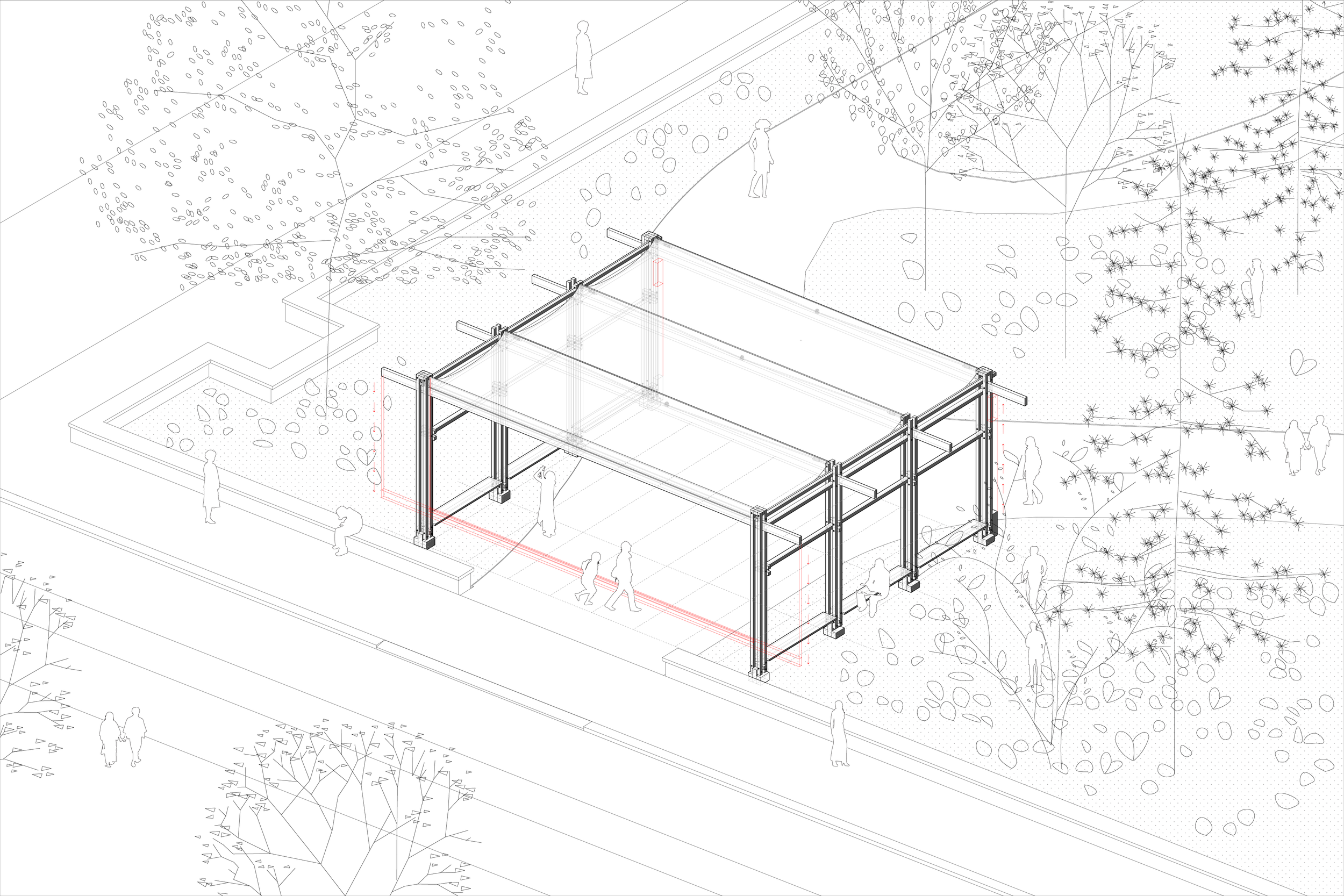
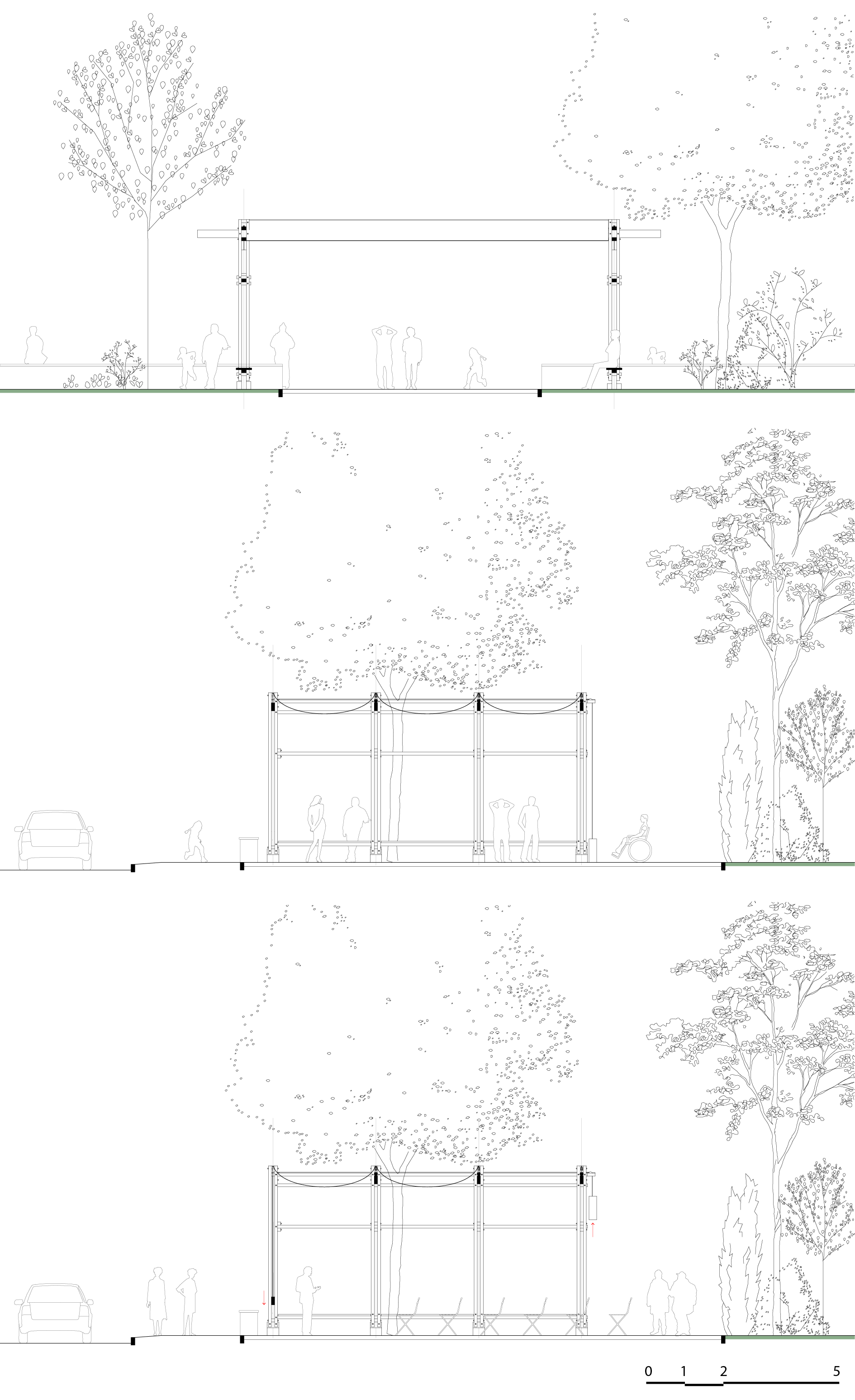
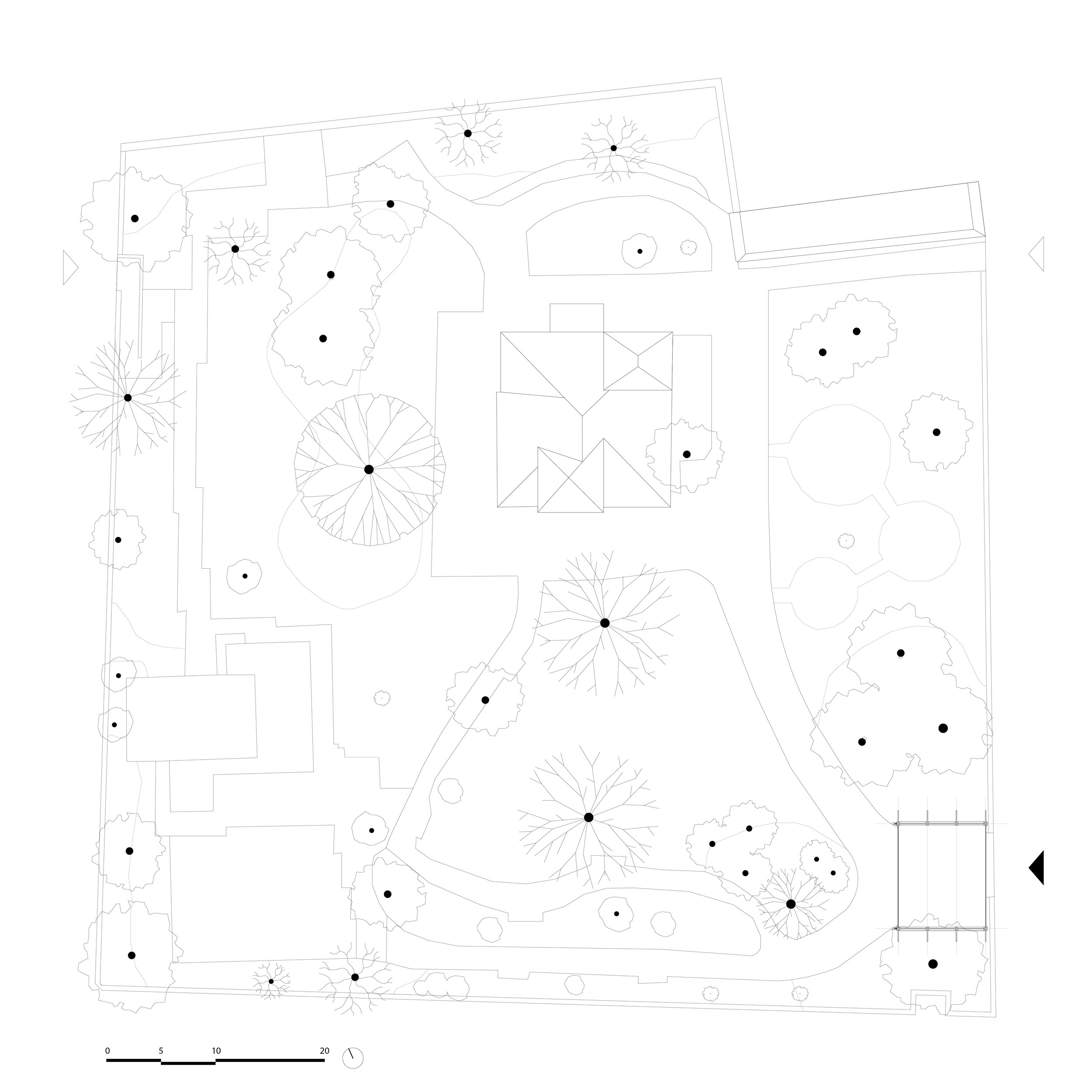
For the design of the action at the Vila Saroli Park, we decided to not make it heavy or inhibitory, just eight wooden columns and a generous white velarium creating a “free space”. The combination of these architectural elements — columns and velarium, results in a specific form that alters the spatial character of the existing car access of the park without occupying it.
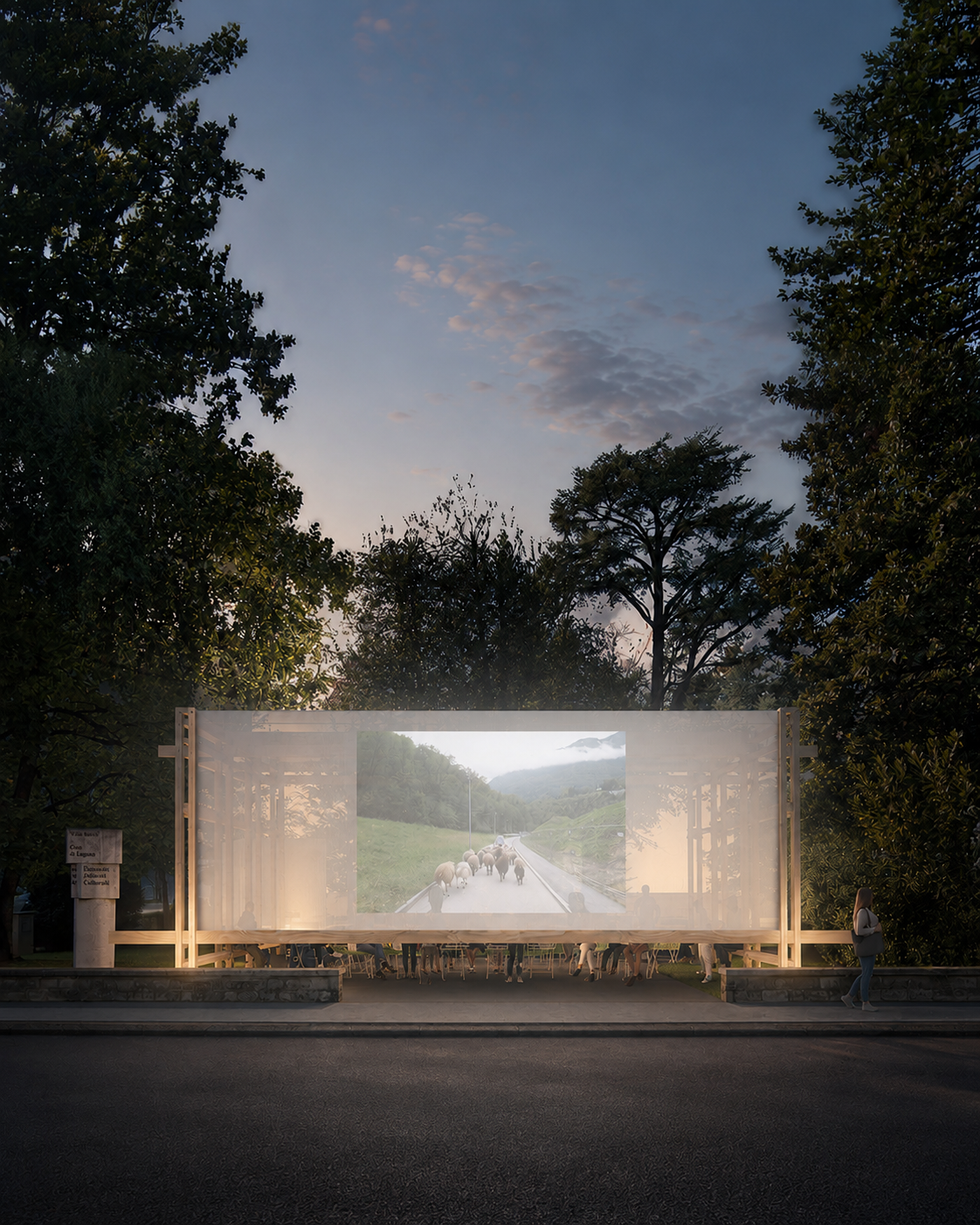
The access stays the same, yet also different by the presence of the instalation enhancing its perimeter. Looking closely, the wooden columns are also references that emphasizes a new entrance, and the velarium — which spans 10 meters freely — is made of cheap white translucent netting cloth used in greenhouses, providing shadows that change during the day as sunlight enters and moves through space and shades existing trees. This roof can also become a wall at night, providing a wall of projection, in between the columns. This set, together, will give stability for the whole structure without the need for any intervention on the existing ground of the park.
The Free–Space Action will be, at the same time, a specific form that serves as a strong image for the Biennale and an indeterminate space for life to unfold as free as possible
-
Year: 2026
Location: Lugano, Switzerland
Status: Proposal for intervention at the Biennale Svizzera del Territorio, 2026 - Handle With Care -
Competition Team: MATTERIA + AGENCIA
Authors: Lucas Coelho Netto, Priscila Bellas